1
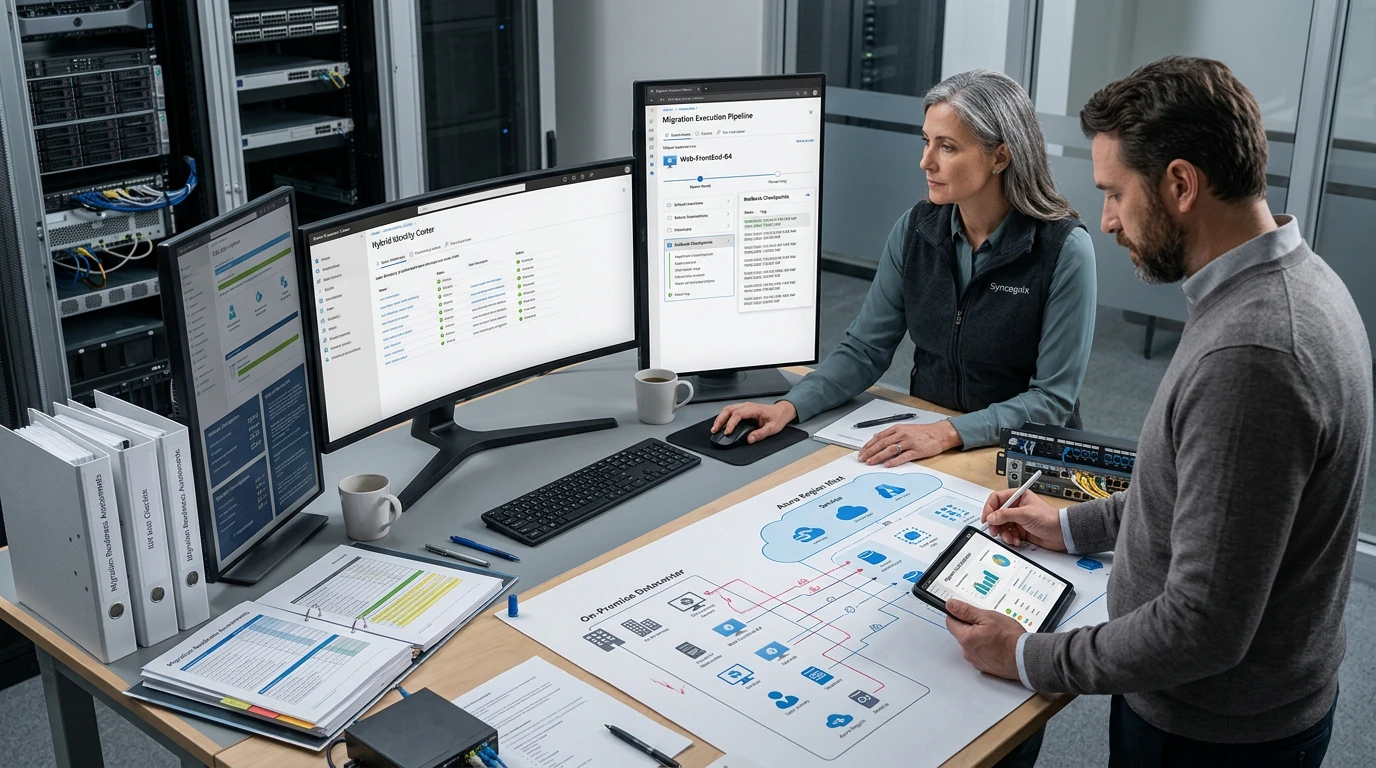
Migrating resources without first mapping dependencies, traffic, data, recovery objectives, and rollback paths.
Loading Syncognix
Loading Syncognix
Package applications in containers and run them on right-sized orchestration — Kubernetes when you need it, simpler when you don't.
Package applications in containers and run them on right-sized orchestration — Kubernetes when you need it, simpler when you don't.
The goal is not simply to complete a list of tasks. It is to remove a specific operational or customer constraint, prove the result, and leave clear ownership after delivery.
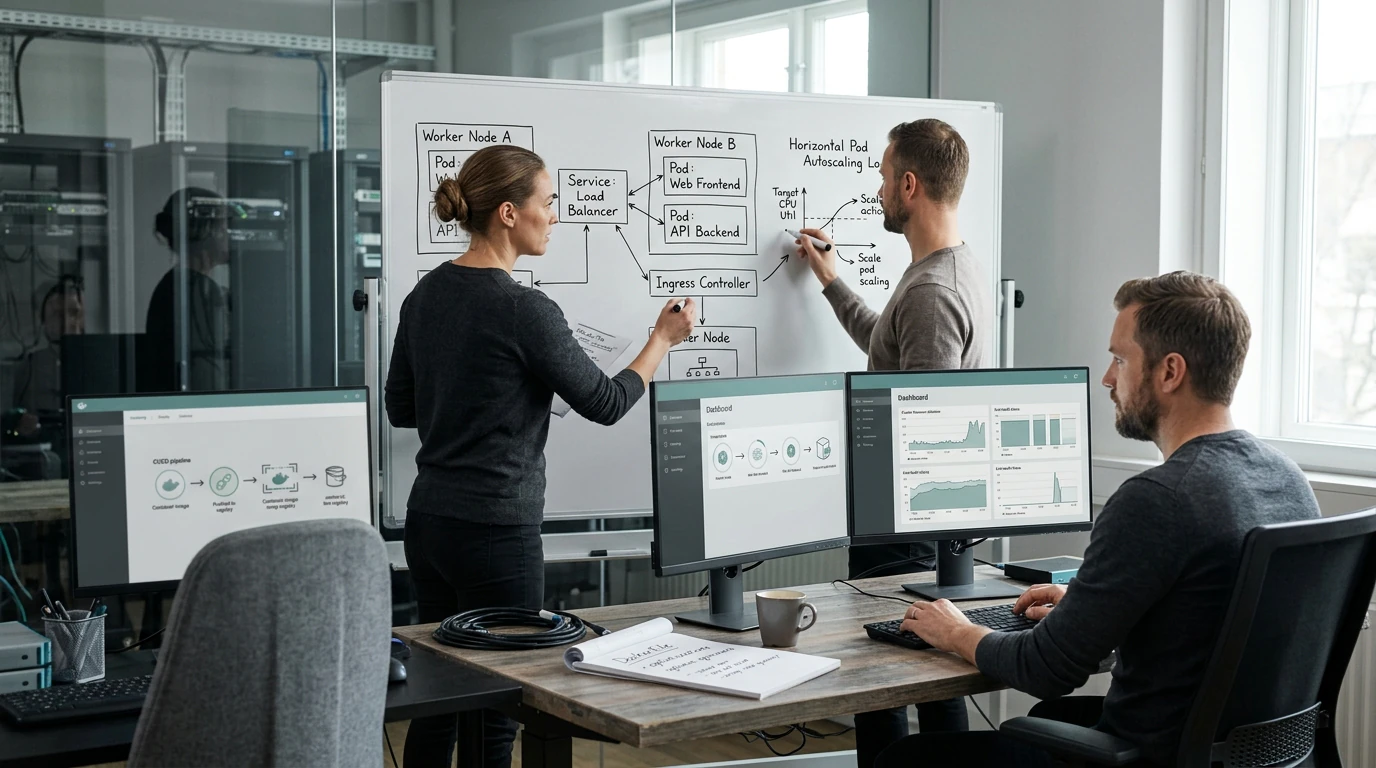
One accountable team connecting the decisions, quality checks, and handoff required for a durable result.
"Works on my machine" is a containerization problem, and unpredictable scaling is an orchestration one. We containerize applications and — only when scale justifies it — run them on Kubernetes that a small team can actually operate.
Infrastructure has grown through one-off decisions, leaving unclear ownership, inconsistent environments, and manual recovery.
Deployments depend on individual knowledge, making releases slow, stressful, and difficult to audit.
Cost, reliability, security, and delivery speed are optimized separately even though each change affects the others.
We connect diagnosis, scope, execution, validation, and operational ownership. The package changes the depth and scale—not the discipline of the delivery system.
We confirm the desired outcome, users, current state, dependencies, risks, and evidence of success before prescribing containerization & kubernetes.
We translate application containerization (Docker) and orchestration platform setup (K8s/ECS/Cloud Run) into visible decisions, responsibilities, milestones, and review criteria.
Delivery moves through reviewable increments with quality checks, exception handling, and stakeholder decisions recorded before they become rework.
We complete operations runbook, confirm handoff and escalation paths, and leave a practical measurement and improvement plan.
Every tier keeps the core controls below. Package level changes the volume, depth, complexity, or operating cadence.
Application containerization (Docker)
Orchestration platform setup (K8s/ECS/Cloud Run)
Autoscaling and health checks
Observability stack (logs, metrics, alerts)
Operations runbook
The visible deliverable is rarely the whole system. These are the recurring gaps we design out before they become delay, rework, or risk.
Migrating resources without first mapping dependencies, traffic, data, recovery objectives, and rollback paths.
Automating deployment while leaving configuration drift, secrets, observability, and access controls unresolved.
Right-sizing from averages and invoices instead of workload behavior, service levels, and growth scenarios.
Our advantage is not a claim that trade-offs disappear. It is the ability to connect the decisions other providers often split apart, make quality visible, and leave ownership clear.
Architecture, security, deployment, observability, cost, and recovery are treated as one operating system.
Changes are rehearsed with validation and rollback criteria before production cutover.
Runbooks, ownership, alerts, and knowledge transfer make the environment operable after the project.
Scope advantage: The scope makes application containerization (Docker) explicit, then connects it to orchestration platform setup (K8s/ECS/Cloud Run); those dependencies are less likely to disappear between separate vendors.
Final targets are set during alignment, using a baseline, a named owner, and a realistic measurement window. Typical measures include:
Deployment frequency and change failure rate
Availability and recovery time
Unit infrastructure cost and utilization
Containerize
Secure USD checkout powered by Stripe. By continuing, you agree to our Terms, Refund & Cancellation Policy, and Delivery Policy. Charges appear as SYNCOGNIX.
Orchestrate
Secure USD checkout powered by Stripe. By continuing, you agree to our Terms, Refund & Cancellation Policy, and Delivery Policy. Charges appear as SYNCOGNIX.
Platform Engineering
Secure USD checkout powered by Stripe. By continuing, you agree to our Terms, Refund & Cancellation Policy, and Delivery Policy. Charges appear as SYNCOGNIX.
Not sure which package fits? Build a guided project brief. We will use your goal, current stage, timing, and investment range to recommend the right package or a strategy session.
Honestly, many teams don't — Cloud Run or ECS delivers most benefits with a tenth of the operational load. The Containerize tier exists precisely for that recommendation.
That's the design goal: managed control planes, sensible defaults, runbooks, and a handover workshop. Retainer support available if you'd rather not.
We keep stateful services on managed database offerings rather than inside the cluster — boring choices that prevent 3 a.m. pages.