1
Buying capacity or a premium plan without matching it to workload, traffic, caching, database, and support needs.
Loading Syncognix
Loading Syncognix
Your own physical or high-spec cloud server, fully managed — for workloads that need serious, predictable horsepower.
Your own physical or high-spec cloud server, fully managed — for workloads that need serious, predictable horsepower.
The goal is not simply to complete a list of tasks. It is to remove a specific operational or customer constraint, prove the result, and leave clear ownership after delivery.

One accountable team connecting the decisions, quality checks, and handoff required for a durable result.
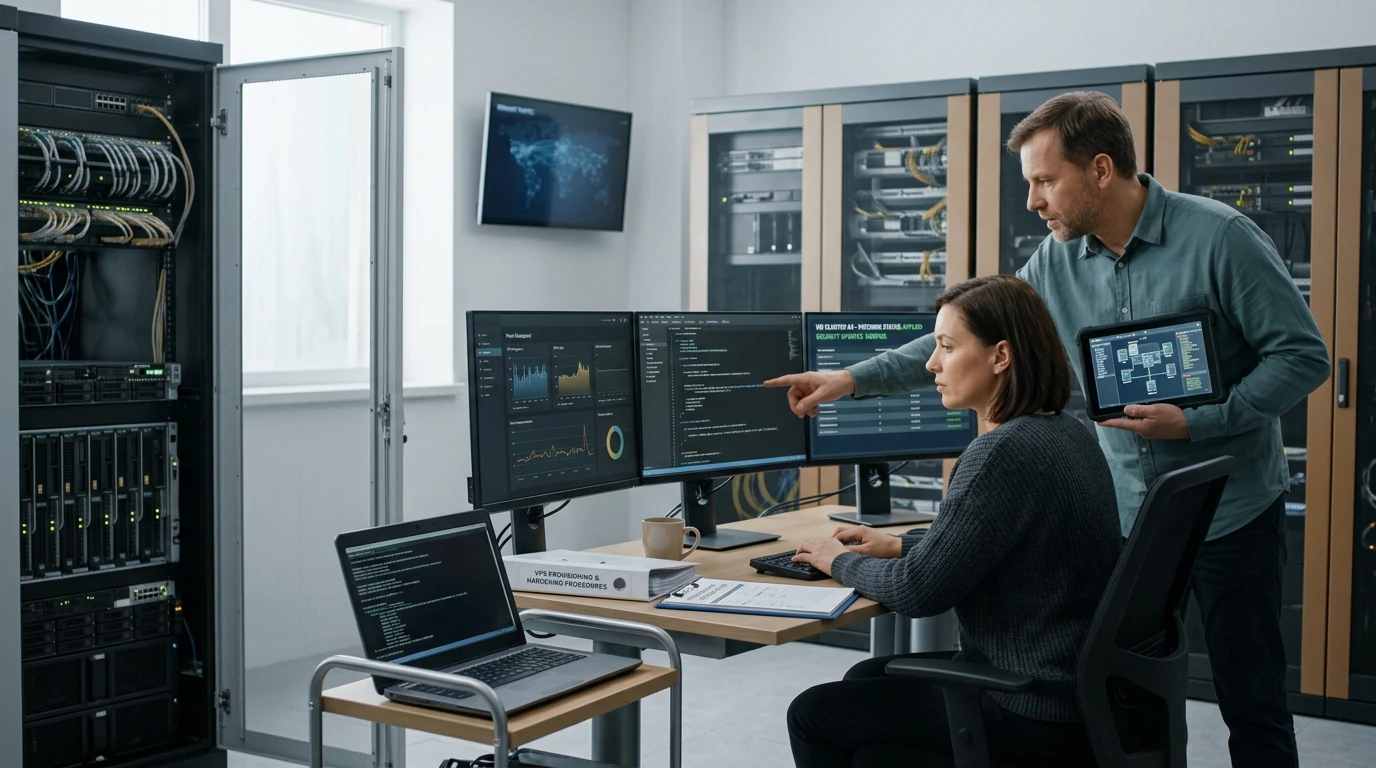
Some workloads — heavy databases, high-traffic platforms, compliance-bound systems — need dedicated iron. But dedicated hardware without dedicated ops staff is a liability. We run the server so it's an asset.
Hosting, DNS, email, certificates, backups, and vendors are split across accounts with unclear access and ownership.
Performance or availability problems are treated as isolated tickets instead of symptoms of capacity and configuration choices.
Backups exist but restore procedures, retention, monitoring, and business recovery expectations are untested.
We connect diagnosis, scope, execution, validation, and operational ownership. The package changes the depth and scale—not the discipline of the delivery system.
We confirm the desired outcome, users, current state, dependencies, risks, and evidence of success before prescribing dedicated server management.
We translate server provisioning or takeover audit and hardening, patching, and firewall management into visible decisions, responsibilities, milestones, and review criteria.
Delivery moves through reviewable increments with quality checks, exception handling, and stakeholder decisions recorded before they become rework.
We complete monthly performance reporting, confirm handoff and escalation paths, and leave a practical measurement and improvement plan.
Every tier keeps the core controls below. Package level changes the volume, depth, complexity, or operating cadence.
Server provisioning or takeover audit
Hardening, patching, and firewall management
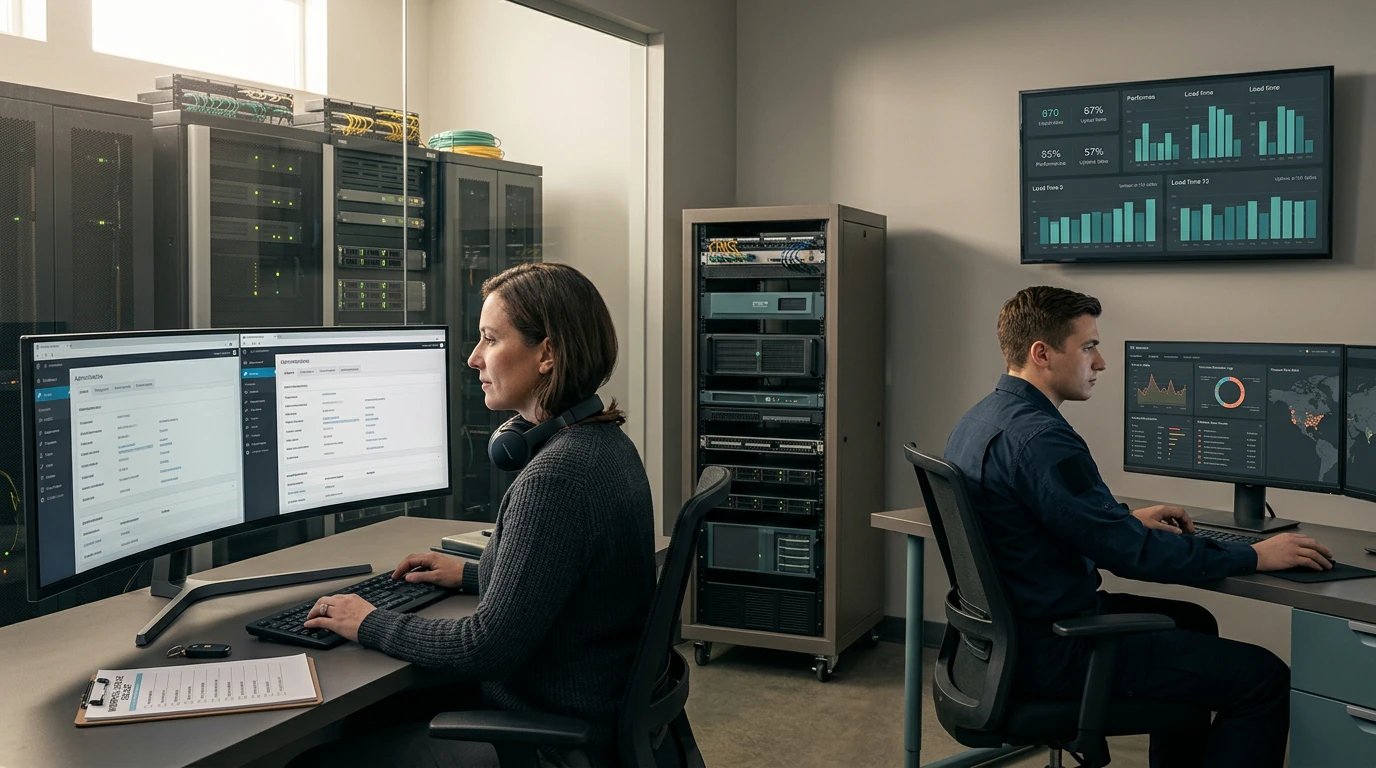
24/7 monitoring with response SLAs
Backup and recovery configuration
Monthly performance reporting
The visible deliverable is rarely the whole system. These are the recurring gaps we design out before they become delay, rework, or risk.
Buying capacity or a premium plan without matching it to workload, traffic, caching, database, and support needs.
Leaving DNS, registrar, email authentication, certificates, and administrative access undocumented.
Assuming a provider snapshot is a complete backup and disaster-recovery strategy.
Our advantage is not a claim that trade-offs disappear. It is the ability to connect the decisions other providers often split apart, make quality visible, and leave ownership clear.
The full service chain—domain, DNS, delivery, compute, data, email, backup, and monitoring—has clear ownership.
Configuration and capacity decisions are tied to real workload evidence and recovery expectations.
Human support, documentation, and escalation paths are designed into the service rather than added after an incident.
Scope advantage: The scope makes server provisioning or takeover audit explicit, then connects it to hardening, patching, and firewall management; those dependencies are less likely to disappear between separate vendors.
Final targets are set during alignment, using a baseline, a named owner, and a realistic measurement window. Typical measures include:
Availability and response time
Backup success and tested restore time
Support response and incident recurrence
Managed
Secure USD checkout powered by Stripe. By continuing, you agree to our Terms, Refund & Cancellation Policy, and Delivery Policy. Charges appear as SYNCOGNIX.
Managed Plus
Secure USD checkout powered by Stripe. By continuing, you agree to our Terms, Refund & Cancellation Policy, and Delivery Policy. Charges appear as SYNCOGNIX.
Mission Critical
Secure USD checkout powered by Stripe. By continuing, you agree to our Terms, Refund & Cancellation Policy, and Delivery Policy. Charges appear as SYNCOGNIX.
Not sure which package fits? Build a guided project brief. We will use your goal, current stage, timing, and investment range to recommend the right package or a strategy session.
No — hardware/instance costs are billed at provider cost (typically USD $100–500/mo depending on spec). This price covers the management that keeps it healthy.
Yes. Takeovers start with a documented audit so we know exactly what we're inheriting before the SLA clock starts.
Hetzner, OVH, AWS, and others — we'll recommend based on your performance, budget, and data-residency needs.